Gas Line Repair & Installation in San Antonio
You typed in gas line repair San Antonio because something doesn't feel right: you smell rotten eggs near the range, a new appliance won't get enough fuel, or you need a fresh run to a pool heater, generator, or outdoor kitchen. Here's how we handle it: Armor Pro Services tests, repairs, and installs natural-gas lines across Bexar County, we pull the permit through the City of San Antonio Development Services Department under our license, and every line we touch gets pressure-tested to 10 psi for 15 minutes minimum before we put it back in service. We're licensed under Texas RMP #36282, and you'll get an upfront price before any wrench turns.
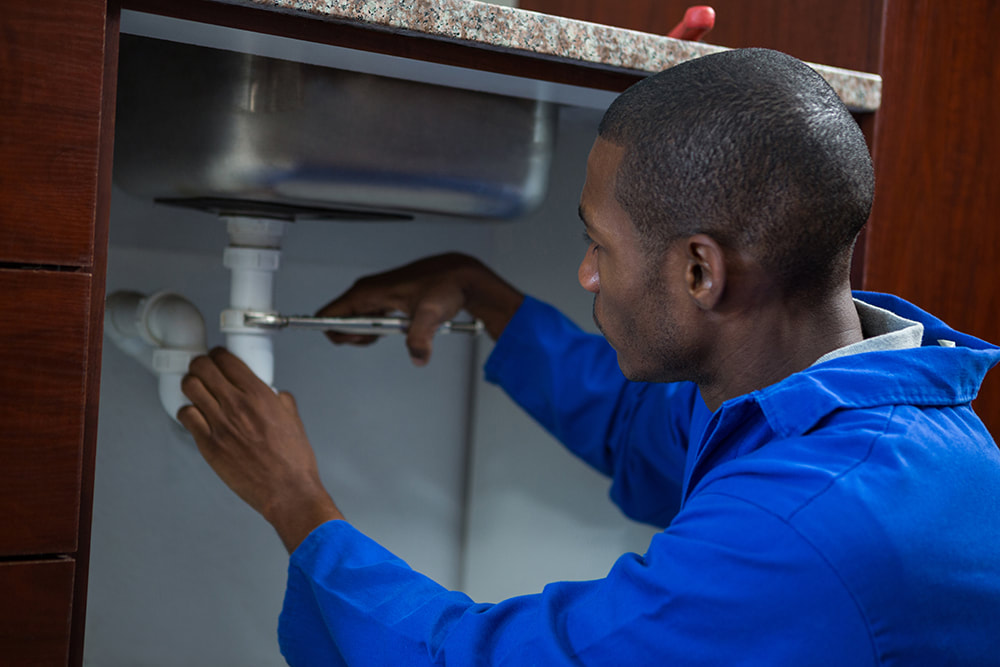
Gas Line Repair in San Antonio: What We Actually Do
A gas line problem is not a wait-and-see situation, so we treat it like the safety call it is. Most gas repairs in this market come down to three things: a leaking joint or fitting that's bleeding gas at a connection, a corroded or damaged section of black iron or CSST that needs to be cut out and replaced, or a flex connector behind an appliance that's failed with age. We isolate the line, locate the leak with an electronic combustible-gas detector and a soap test at the fittings, and then repair only what's bad: we won't sell you a whole-house re-pipe when a single fitting is the problem. Black iron pipe is what most San Antonio homes built before the mid-2000s run; newer subdivisions out toward Helotes, Schertz, and the Loop 1604 corridor commonly use CSST (the yellow flex line), which has its own rules. See how we handle gas line repair and CSST bonding in Schertz on those newer builds. Either way, once the repair is made, the line gets pressure-tested to 10 psi and held for 15 minutes minimum to prove it's tight before we relight a single appliance. We hold Texas RMP #36282, we're licensed and insured, and we file the City of San Antonio permit when the scope calls for it. Call 210-212-7667 and tell us what you're smelling or what stopped working, and we'll tell you straight whether we can be out today.
How Do I Know If I Have a Gas Leak?
Natural gas is odorless on its own, so the gas company adds a mercaptan additive that smells like rotten eggs or sulfur. That smell is the most reliable warning sign you have. But it's not the only one. Watch for these: a hissing or whistling sound near a gas line, appliance, or the meter; a sulfur or rotten-egg odor that comes and goes near the stove, water heater, or furnace; dead or dying vegetation in a straight line across the yard where a buried line runs; a higher-than-normal gas bill with no change in usage; or a yellow, lazy burner flame instead of a crisp blue one, which can signal incomplete combustion. If you suspect a leak, don't test it yourself with a flame, don't flip light switches, and don't run anything that sparks. Get everyone out of the house, leave the door open behind you, and call CPS Energy at 1-800-870-1760 from outside to have them shut the meter. Once the utility has secured the line, that's when we come in. We locate the exact leak point with an electronic detector, repair the fault, and pressure-test the whole line to 10 psi for 15 minutes before anything gets relit. We don't guess and we don't relight a system we haven't proven tight.
Gas Line Installation Services: New Lines Done to Code
Adding a gas line is a planning job, not an emergency, so we do it deliberately. New runs we install most often: a line to a gas range or cooktop in a kitchen that was previously all-electric, a dedicated run for a tankless water heater that the existing line can't feed, a stub for a pool or spa heater, a connection for a standby generator, a drop for an outdoor kitchen or grill island, and fireplace or fire-pit lines. The single most important step on any new line is sizing it correctly. Every gas appliance has a BTU demand, and the pipe has to be large enough to carry the total demand of everything on the line at full fire without starving the appliances at the end of the run. We add up the connected load, measure the developed length from the meter, and size the pipe to deliver full BTU at the farthest appliance. This is the same calculation that matters before a tankless install, since an undersized gas line is the number-one reason a new tankless underperforms, which is why we verify the gas line BTU capacity before a tankless install rather than after. When we use CSST, we bond it to the home's grounding electrode system per manufacturer spec, because CSST has to be bonded to handle a lightning strike safely. Then the line is pressure-tested to 10 psi for 15 minutes minimum, inspected under the City of San Antonio permit, and only then connected and put into service. Planning a project? Call 210-212-7667 for an upfront quote before any work starts.
Gas Line Leak Repair: The Process, Step by Step
First-time customers usually don't know what a leak repair actually involves, so here's exactly what happens. Step 1, utility shutoff first. If there's an active leak and the meter isn't already off, the gas utility secures it at the meter before we work. Safety comes before speed. Step 2, leak location. We pressurize the line and walk it with an electronic combustible-gas detector, then confirm suspect fittings with a soap-bubble test. We find the actual leak point instead of replacing pipe at random. Step 3, upfront written scope. Before any cutting, you get the price and the plan in writing. You approve it or you don't. Step 4, the repair. We cut out and replace the failed section, joint, or connector, using black iron pipe or properly bonded CSST as the system requires. Step 5, pressure test. The repaired line is charged to 10 psi and held for 15 minutes minimum. If it holds, it's tight. If it drops, we're not done, and we don't pretend otherwise. Step 6, permit and inspection. When the scope requires it, we file through the City of San Antonio Development Services Department under RMP #36282 and coordinate the inspection so you don't have to. Step 7, relight and verify. Only after the line proves tight do we relight pilots and appliances and confirm clean blue flames. We don't leave a gas system running that we haven't proven.
Residential and Commercial Gas Line Work Across Bexar County
Most of our gas work is residential: a leaking flex connector behind a range in a Monte Vista bungalow, a new line for a tankless conversion in a Stone Oak two-story, a generator hookup on a Helotes Hill Country property where outages from storms are a real concern. The fundamentals don't change with the property: locate the fault, size the line for the real load, bond the CSST, pressure-test to 10 psi for 15 minutes, pull the permit. For light-commercial gas line repair, whether a restaurant kitchen, a small retail space, or a tenant build-out, the same licensed work applies, with the added attention that commercial occupancy and inspection requirements bring. We work within the licensed plumbing trade only: we run and repair the gas piping and connect the appliance, but we don't do the electrical, the HVAC mechanical, or any structural work. If a job needs scope outside our license, we'll tell you plainly instead of taking on work we're not the right contractor for. Whether it's residential gas line installation in a single-family home or commercial gas line repair for a small business, you're getting a Texas-licensed plumber on the job under RMP #36282, not a helper. Call 210-212-7667 to talk it through.
Why Gas Lines Fail Here: Local Conditions
San Antonio's ground and housing stock are hard on gas piping in specific ways. Expansive clay soil across much of the metro swells when wet and shrinks hard in drought, and that seasonal movement stresses buried lines and the joints where they enter the foundation, the same soil cycle that cracks sewer laterals works on gas piping too. Black iron pipe in pre-1970 core neighborhoods, parts of the West Side, Monte Vista, and Olmos Park, has decades of exposure to moisture and can corrode at threaded joints and where it transitions through a slab. Older flex connectors behind ranges and dryers get brittle and crack with age and repeated movement; a connector that was fine for fifteen years can start weeping at the ferrule. Newer suburban builds out past Loop 1604 commonly run CSST, which is reliable when it's installed and bonded correctly, but an unbonded CSST line is a documented hazard during the lightning that rolls through Central Texas every storm season. We check the bonding on every CSST system we work on. Episodic hard freezes here also drive a spike in generator and appliance work, which means more new gas runs, and more reason to size and test them properly the first time. Call 210-212-7667 and we'll assess what your home actually has.
Frequently asked
How do I know if I have a gas leak?
The clearest sign is a rotten-egg or sulfur smell, since the gas company adds an odorant to otherwise odorless natural gas. Other signs include a hissing sound near a line or appliance, a dead streak of vegetation over a buried line in the yard, an unexplained jump in your gas bill, or a yellow, lazy burner flame instead of a crisp blue one. If you suspect a leak, get everyone out of the house, don't flip any switches or light anything, and call CPS Energy at 1-800-870-1760 from outside to shut the meter. Once the utility clears the line, call us at 210-212-7667 to locate and repair it, and we'll pressure-test the line to 10 psi for 15 minutes before relighting anything.
Do you need a permit for a gas line in San Antonio?
Yes. Gas line installation and most gas line repairs require a permit through the City of San Antonio Development Services Department, and the permit triggers a city inspection of the work. Armor Pro Services files under Texas RMP #36282, so you don't have to navigate Development Services on your own. Permitted, inspected gas work protects you, since unpermitted gas piping can become a liability problem at resale and can affect a homeowner's insurance claim if a line ever causes damage. We include the permit in the quoted scope rather than treating it as a surprise add-on.
How much does gas line repair cost?
We don't publish flat rates because two gas jobs are rarely the same. What actually moves the price: whether it's an isolated fitting or connector versus a corroded run that has to be cut out and replaced, the length of new pipe required and how far it runs from the meter, whether the line is accessible or buried under a slab or in a wall, whether CSST bonding or new venting is involved, and the City of San Antonio permit and inspection when the scope requires it. A single failed appliance connector is at the low end; a new run for a generator or a full re-pipe of a corroded system is a larger job. We give you a firm, written, upfront price before any work starts. Call 210-212-7667 and describe what's going on, and we can usually give you a realistic ballpark after a few questions.
Can you install a gas line for a new range, tankless heater, or generator?
Yes, that's some of the most common new-line work we do. The key is sizing: we add up the BTU demand of every appliance on the line, measure the developed length from the meter, and size the pipe so the appliance at the end of the run still gets full fire. An undersized line is the number-one reason a tankless water heater or a high-BTU range underperforms, so we verify the gas line capacity before quoting the appliance install. When we run CSST, we bond it to the home's grounding system per manufacturer spec, and we pressure-test the finished line to 10 psi for 15 minutes before it's put into service.
What is CSST and why does it need to be bonded?
CSST is corrugated stainless steel tubing, the yellow (or sometimes black-coated) flexible gas line common in San Antonio homes built from the mid-2000s onward. It installs faster than rigid black iron and routes around framing easily. Because it's thin-wall stainless, it has to be bonded to the home's grounding electrode system so that a nearby lightning strike doesn't arc through the tubing and puncture it, a documented failure mode in Central Texas storm country. We check CSST bonding on every system we work on and correct it when it's missing, because an unbonded CSST line is a real hazard, not a code technicality.
Are you licensed to do gas line work in San Antonio?
Yes. Armor Pro Services holds Texas RMP license #36282, and gas line work is squarely within the licensed plumbing trade. We file permits through the City of San Antonio Development Services Department under that license number and don't subcontract permit-required gas work to unlicensed crews. We work within our license, gas piping and appliance connection, and we don't take on the electrical, HVAC mechanical, or structural scope that sometimes surrounds a project. Workmanship is warranted for one year in writing; parts follow manufacturer terms.